Why do you go to India, people ask. It’s so far away, they say.
 I go because so much is new and exotic, especially the mornings. Beautiful birds, I don’t even know their names, sing sweet songs in the garden, just outside my window. The sun creeps over the mountain and shines on the east slopes across the valley, bringing to life tea plantations that go on for as far as I can see. A comforting smell of wood burning to fuel fires for breakfast blends with a faint aroma of simmering curry. It’s time for breakfast.
I’ve never been a big fan of breakfast at home but reluctantly I down some wholesome cereal or a boiled egg every morning.It’s different here.
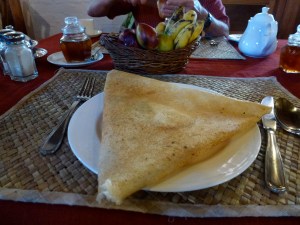
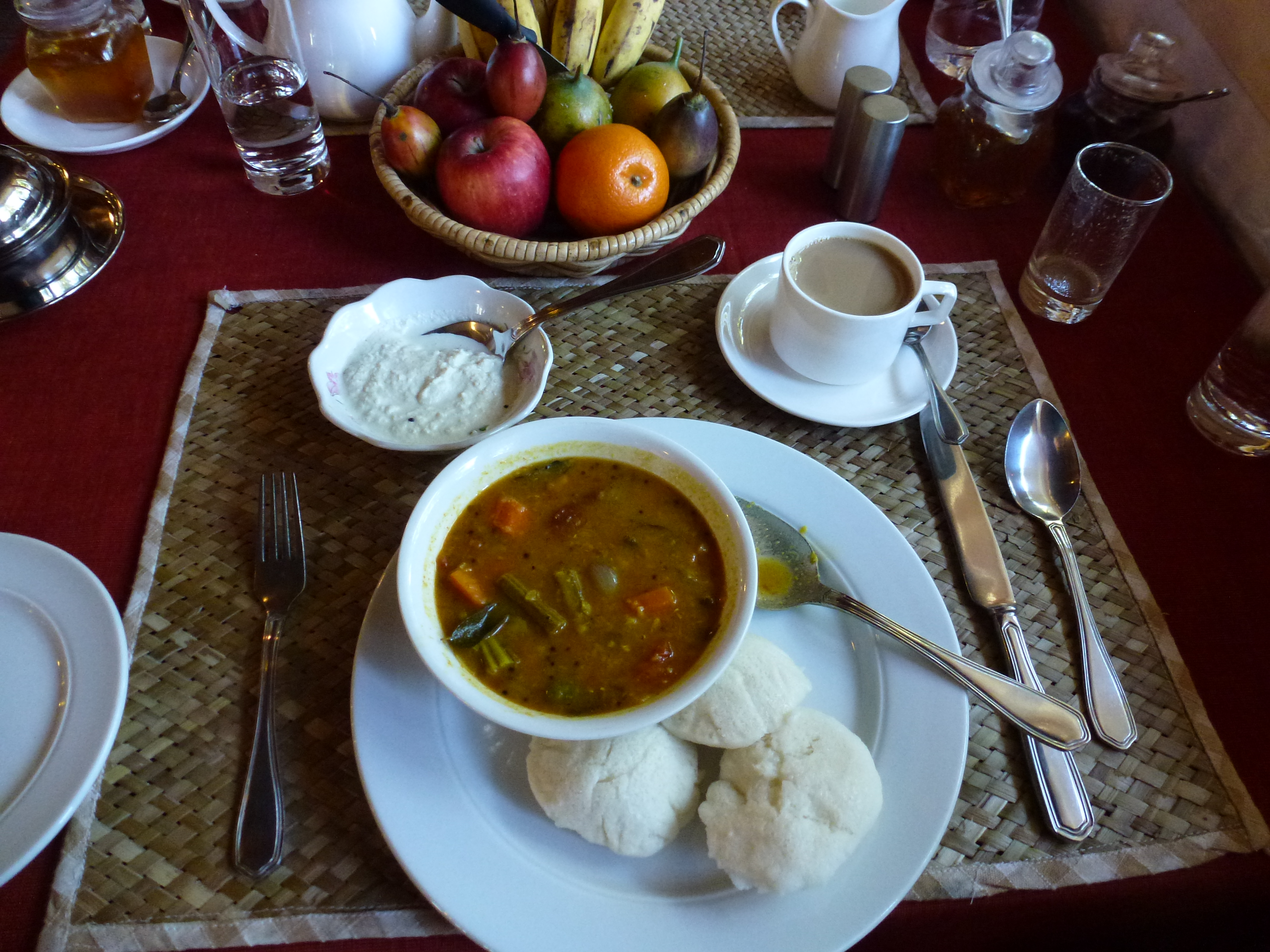
Breakfast is a food-lovers delight. I love Indian breakfasts. Dosas, pizza-size, paper- thin rice flour pancakes, are served with sambar, a spicy, thick, yellow lentil and vegetable soup served with chutney, coconut, tomato and/or my favourite, coriander chutney. For variety, instead of dosa I ask for idli, an uncooked-looking feather-light rice dumpling that I dip into the mouth-watering sambar.
“How is everything this morning?” Ali, the chef, asks.
Ross is eating his omlet and toast. He loves his Canadian breakfast that is also served here.
“OOOO I gush. I love this. May I ask you a question? You don’t have to answer, you’re so busy now. But I really need to know how to make it.” I slurp up more sambar. “It’s sooo good.”
 “Dosa and sambar are very, very traditional.” Ali says. “Also idli. Have you tried idli yet? People love idli too. We make everything from scratch here. It’s important.”
“First you need to soak the grains. Then you grind them like this” and he rolls his hands together. The dosas look easy to make but to be tasty you must carefully prepare the mixture.
“From scratch.” He says again. “For the sambar also. You must always use fresh curry leaf and coriander.” I’m thinking about some of my spice jars at home that have been sitting in the cupboard for fifteen years. Ali continues, “We never use pre-mixed curry powder here. We mix each special spice for every dish we prepare. And we always use tomato, onion, lentils for the sambar.”
I’m in awe and make a secret vow to reform my cooking practices. But I need to let Ali know that I can make some things well, although maybe not sambar and dosa. “Have you tied Angel Pie I ask? It’s our family’s favourite dessert. You can get it on my blog. In fact if you email me your recipes for dosa and idli I can put them on my blog too.”
Ali is thrilled.
And so, dear friends and family here is Ali’s recipe for idli and dosa.
I’ll make it for you some day.
IDLI
|
Boiled Rice
|
750 gms / 3 cups
|
|
Raw Rice
|
250 gms / 1 cup
|
|
Urad Dal
|
250 gms / 1 cup
|
|
Salt
|
To taste
|
|
STEPS TO PERFORM
|
| Step 1 : Soak the rice and dal seperately for 2 hours |
| Step 2 : Grind seperately, the rice should be coarse in texture and the dal should |
| be light and fine texture. |
| |
| Step 3 : Mix together, add salt, blend. |
| |
| Step 4 : Keep covered, ferment overnight. |
| |
| Step 5: Next morning boil water in the pan of the idli steamer, place perforated idli |
| tray lined with muslin cloth on top. |
| |
| Step 6: Pour idli batter into each cup |
| |
| Step 7: Steam until done. |
| |
| Step 8: Check if done by prickling with a fork. |
| |
| Step 9: To remove idli, turn upside down on a platter, sprinkle water over the muslin |
| and slowly remove the muslin. |
| |
| Step 10: Remove idli and keep it warm in a casserole. |
DOSA
|
INGREDIENTS
|
QUANTITY
|
|
Raw rice
|
125 gms / 1/2 cup
|
|
Par boiled rice
|
625 gms / 2 1/2 cups
|
|
Methi seeds
|
1 tbsp / 12 gm
|
|
Urad dal
|
250 gms / 1 cup
|
|
Salt
|
To taste
|
|
STEPS TO PERFORM
|
|
| Step 1 : Soak rice and dal seperately for 4 hours. Grind seperately to a fine batter. |
| |
| Step 2 : Mix both batter together with salt to taste. |
| |
| Step 3 : Set aside overnight to ferment. |
|
|
| Step 4 : Next morning, spread dosa mixture thinly on a heated and greased tava. |
|
Pour a teaspoon of oil around dosa. Cook and fold.
|
| |
| Step 5: Serve with sambar and chutney. |
| |
| Step 6: If masala dosa, keep the potato filling in the centre and |
| fold. |
|
|
|
|
Coming eventually: It is very difficult to write when the warm breezes are blowing and the sun is shining. My posts will continue to be erratic. I want too be outside all the time where my pencil and notepad work but the computer doesn’t. Thank you for your comments. I love them. As soon as I can I’ll tell you about my cooking lesson with Binot, the chef at Windmere. We made my favourite, Sambar.
 our trusted driver these past few weeks travelling slowly through South India, told us Kerala was “God’s Own Country.” I understand now why he couldn’t wait to show us his home state.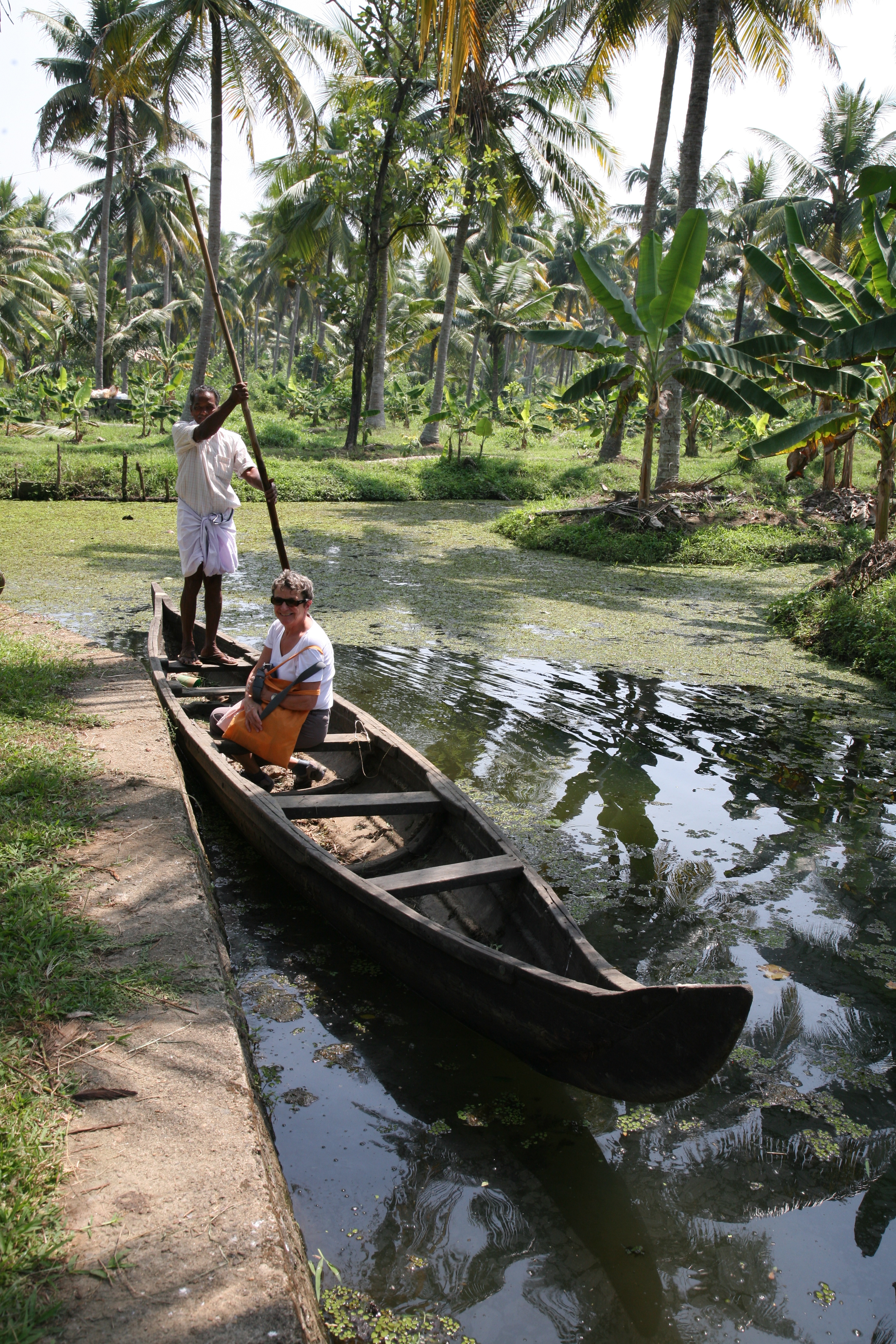
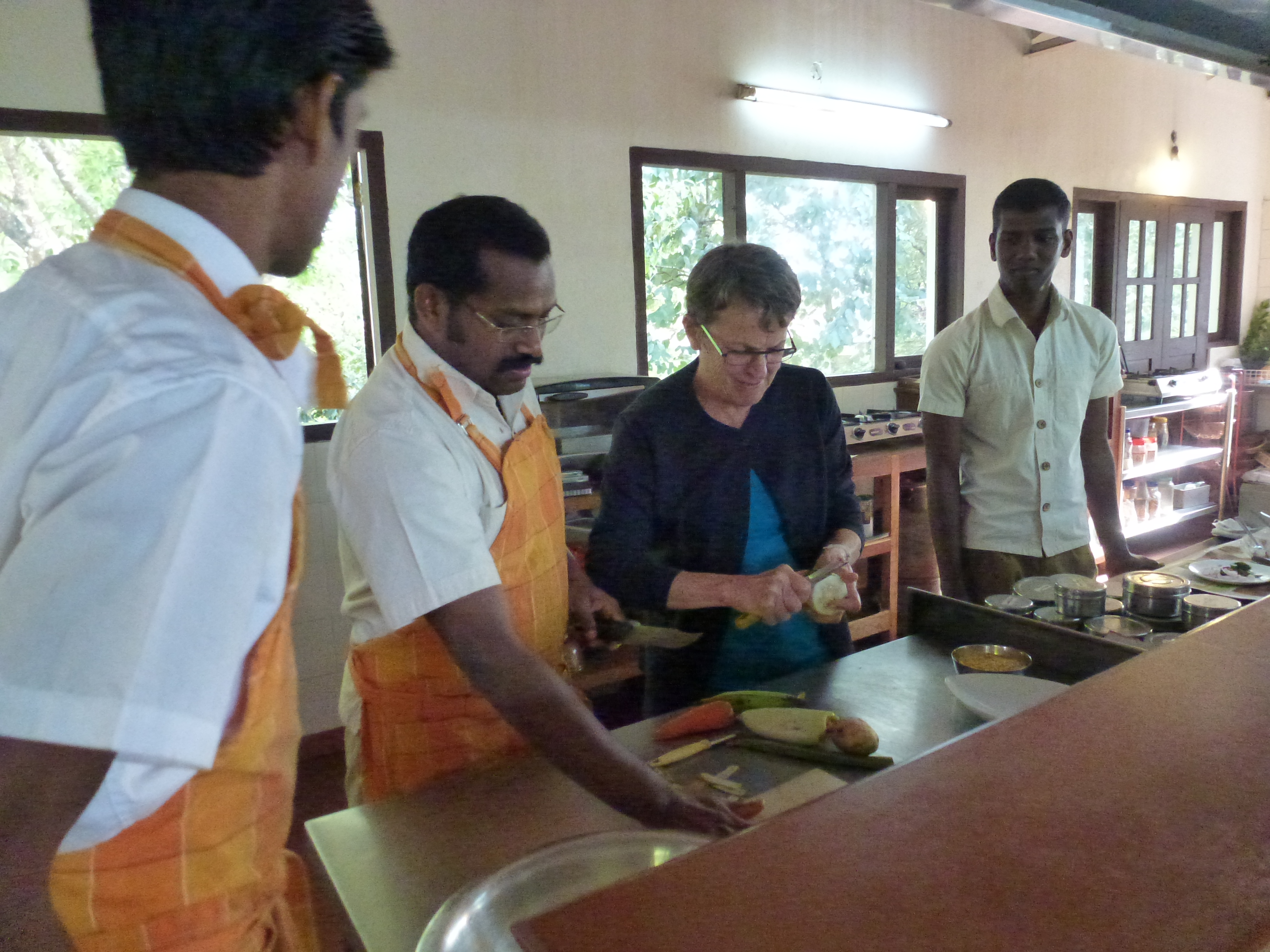
 and Mohan’s favourite, “Kerala Fish Curry.” He has it almost every day with thali, a creative compilation of small tasty local dishes. Traditionally thali’s served on a banana leaf. Wholesome and inexpensive thali includes Kerala brown rice, vegetables, chutney, yoghurt and pickle.What better place to learn how to make Mohan’s fish curry than Cochin or Kochi as it has recently been renamed – it ‘s been a centre of fishing and trading in India for centuries.

 We left out the Kerala and substituted cream. Delicious.




 Travel Musings