 Bumping and sloshing over a muddy track, our open-air jeep creeps slowly over the savannah. With the look of a worried parent on his face Patrick says, “Last night there was a fight between three males. Two younger ones and the old leader were battling for power, control of the pride. One lion was badly injured and ran off. We don’t know where he is. We need to find him, make sure he’s okay.”
Snuggled in between South Sudan and Kenya in the far northwestern reaches of Uganda, Kidepo Valley National Park is one of Africa’s last great wilderness areas. After a torrential downpour an hour ago, the air is cooler and there is an eerie stillness. Smells of damp earth, elephant dung and wet grass fill the air. A big orange sun is sinking into the horizon behind rugged volcanic mountain peaks, and our excitement grows knowing that surprises lurk in the grasses and the fast approaching night.
“What are those curious buildings in the distance?” Ross asks, pointing to big dark forms in the distance that are beginning to come into focus. “It looks like a village.”
“It’s not a village. They are the elephants,” Patrick, who is an expert wildlife guide, born in the area, replies in a proud voice.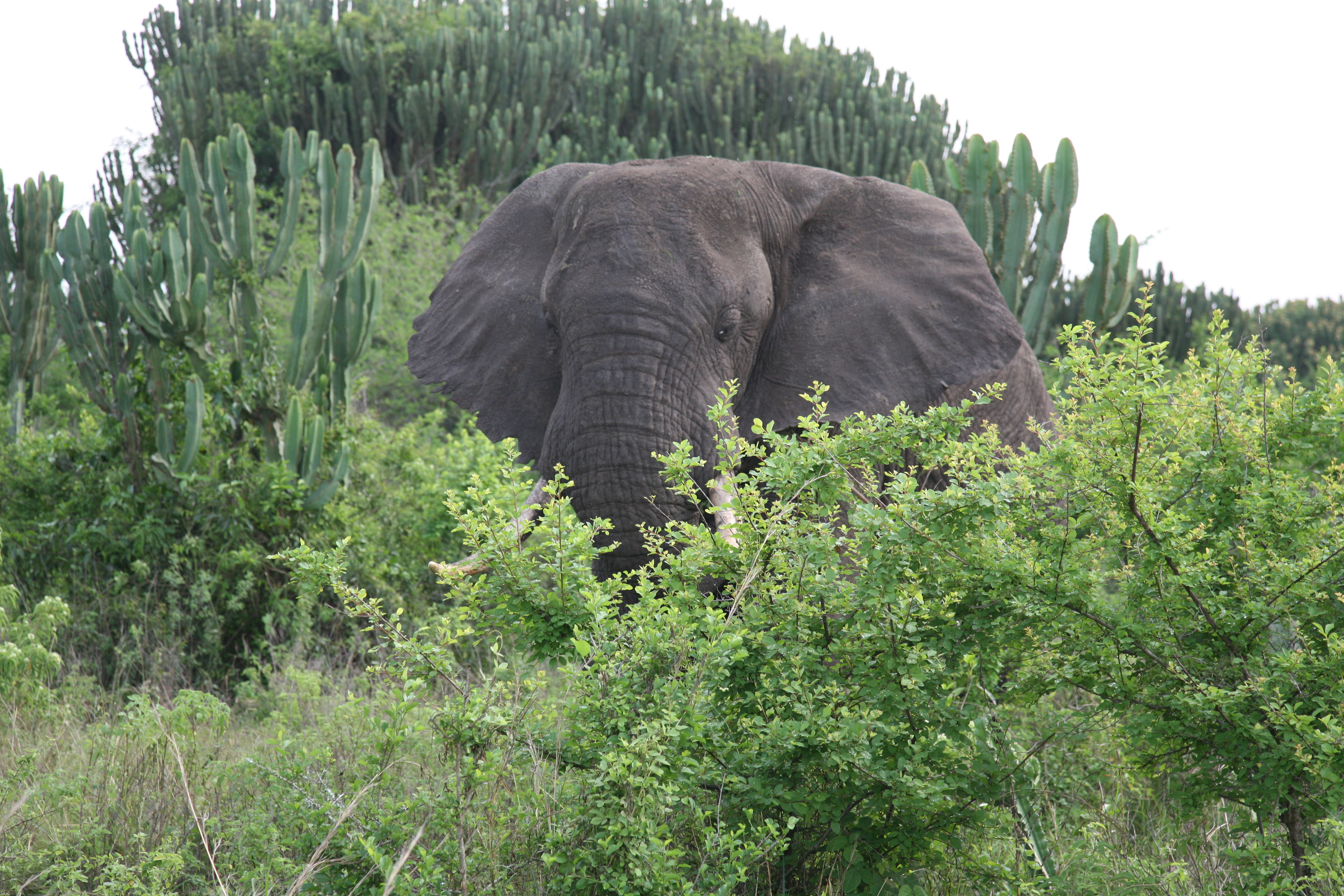
We keep our distance, but the matriarchal herd of forty-two huge elephants is unperturbed as they approach us. They’re feeding on the lush wet grass, stretching their trunks up once in a while to taste the delicious leaves of African Acacia trees that rise majestically out of the savannah. Baby elephants frolic about under the protective eye of their mothers, then bound back to them for vigorous quick feeds. A handful of bull elephants watch on the perimeter of the herd.
 I’m mesmerized by the grace and family cohesiveness of the elephants but, although I could watch them forever, we need to move on. We still need to see if we can find out what happened to the lions.
Our guides scan the high rocky outcrops. “Wondering Where the Lions Are,” Bruce Cockburn’s song, rings through my head.
“The lions have moved on.” Patrick says with certainty. “Look. The giraffes are here.”
I strain my eyes, blinded by the low sun, and pick out a strange group of five or six cream and rosy brown, spotted towers in the grass It is a nursery group of fourteen Rothschild giraffes, with mothers suckling their babies and grazing on the leaves and bark of tall trees. Two huge male giraffes are on the side-lines. For now, the giraffes are safe. Their predators, the lions, are nowhere in sight. 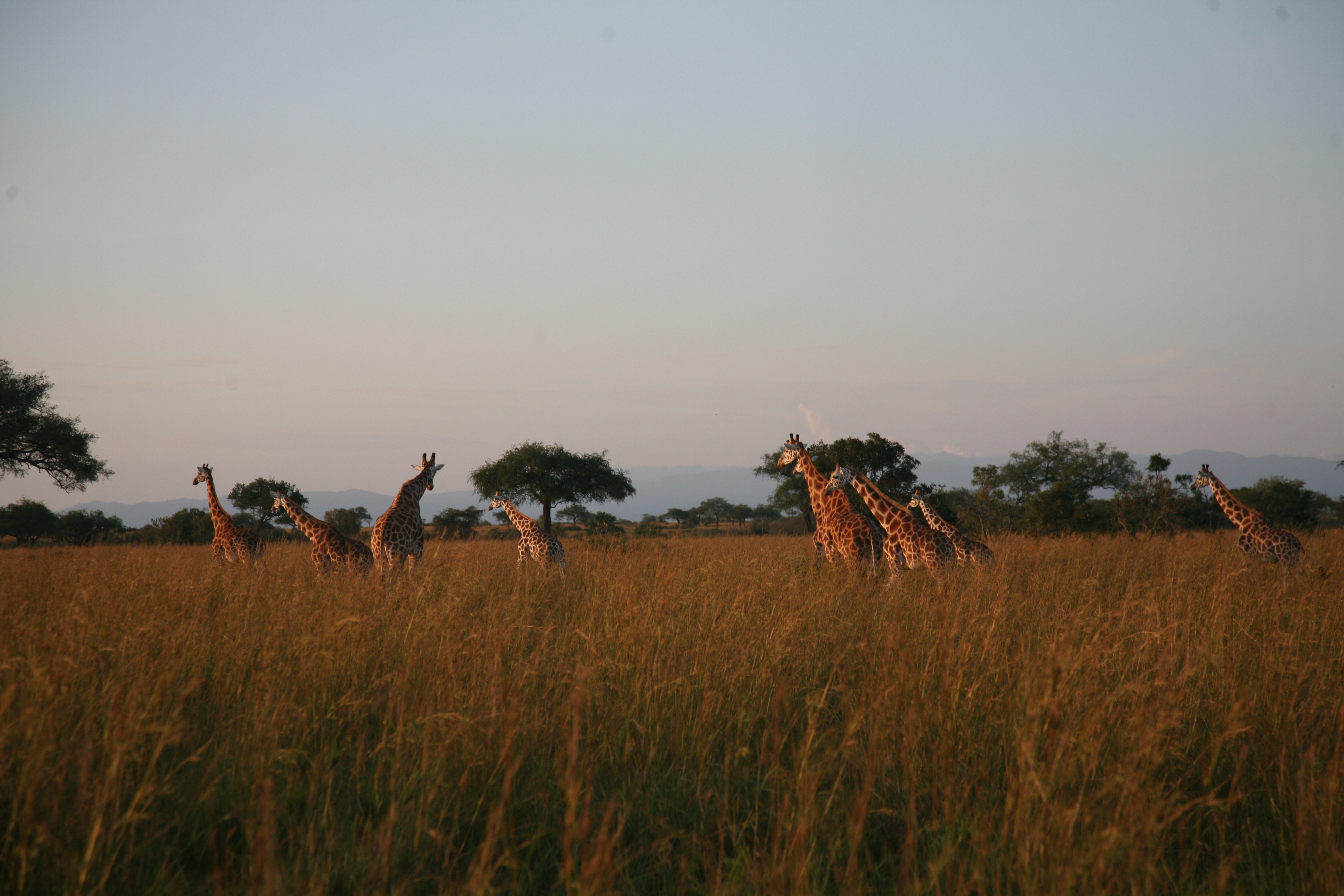
 The number of Rothschild giraffes in Kidepo was a sustainable population of 400 in the 1960’s until poaching, hunting, Idi Amin’s reign of terror, and civil war in the 1970’s and 1980’s, disastrously reduced the population to a single female and two males by 1992. In an urgent effort to save them, three females and one male Rothschild giraffes were flown into Kidepo from Kenya, under the stewardship of the Uganda Wildlife Authority and the Kenyan Wildlife Authority. Some reports estimate that there are now 280 in Uganda but they still remain on the endangered species list.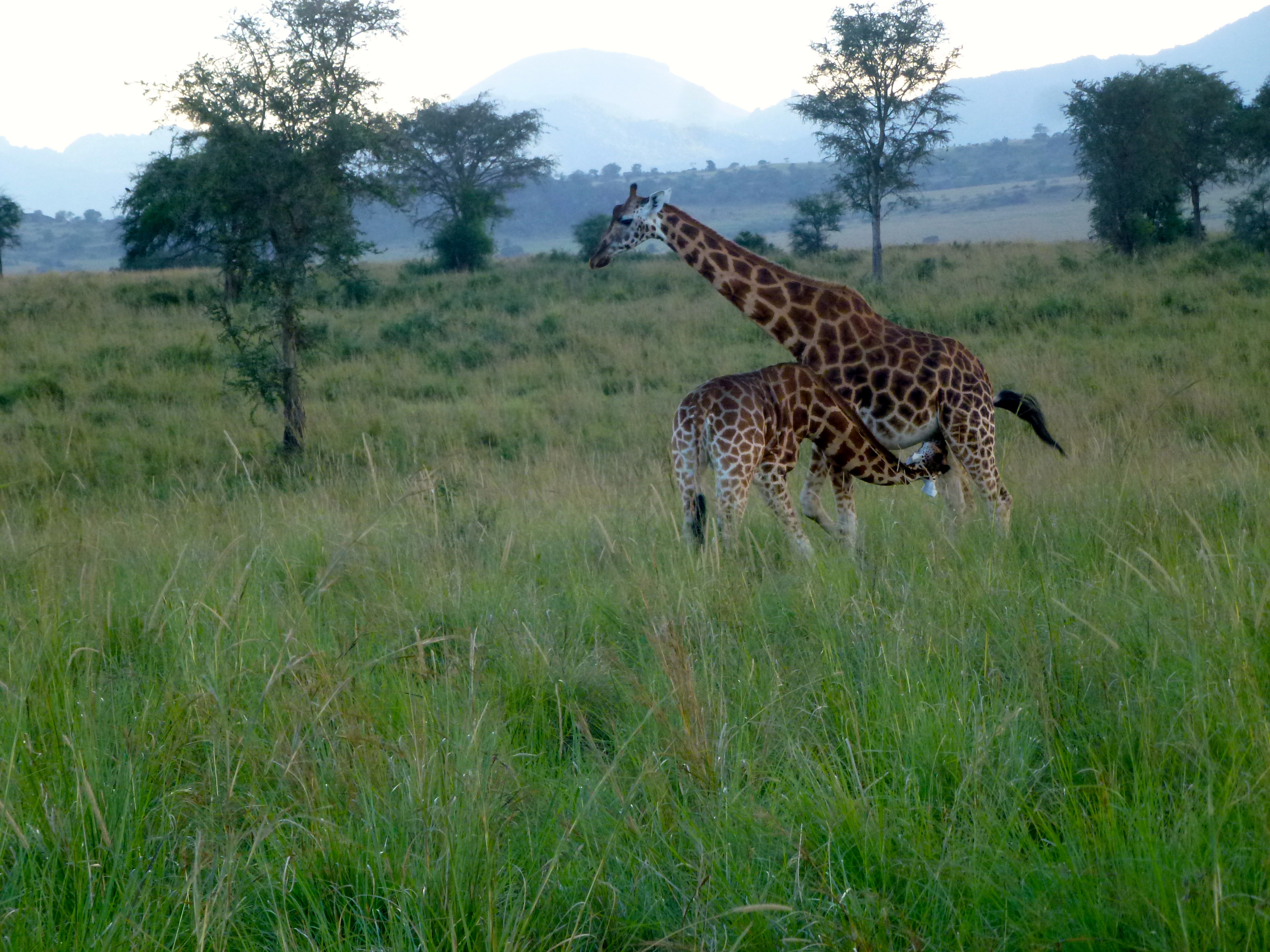
It’s an awesome sight to see fourteen of these beautiful animals together. The Rothschilds are the tallest giraffes on earth. Their babies are six feet tall at birth and adults weigh up to 2800 pounds. We speak in hushed whispers, careful not to disturb them. They are serene and gangly, but if we disturb them this evening they will run – at 56 kilometres an hour.
Later we learn that “Tim,” Kidepo’s senior lion, survived his fight. It wasn’t his first. We find him the next day majestically perched on a rock outcrop above the savannah. There are no giraffes or elephants nearby but hundreds of kob and buffalo are grazing. I suppose Tim is planning the next dinner for his pride. 
For now, all’s well in the Kidepo Valley.










 Travel Musings