Idli and Dosa

Why do you go to India, people ask. It’s so far away, they say.
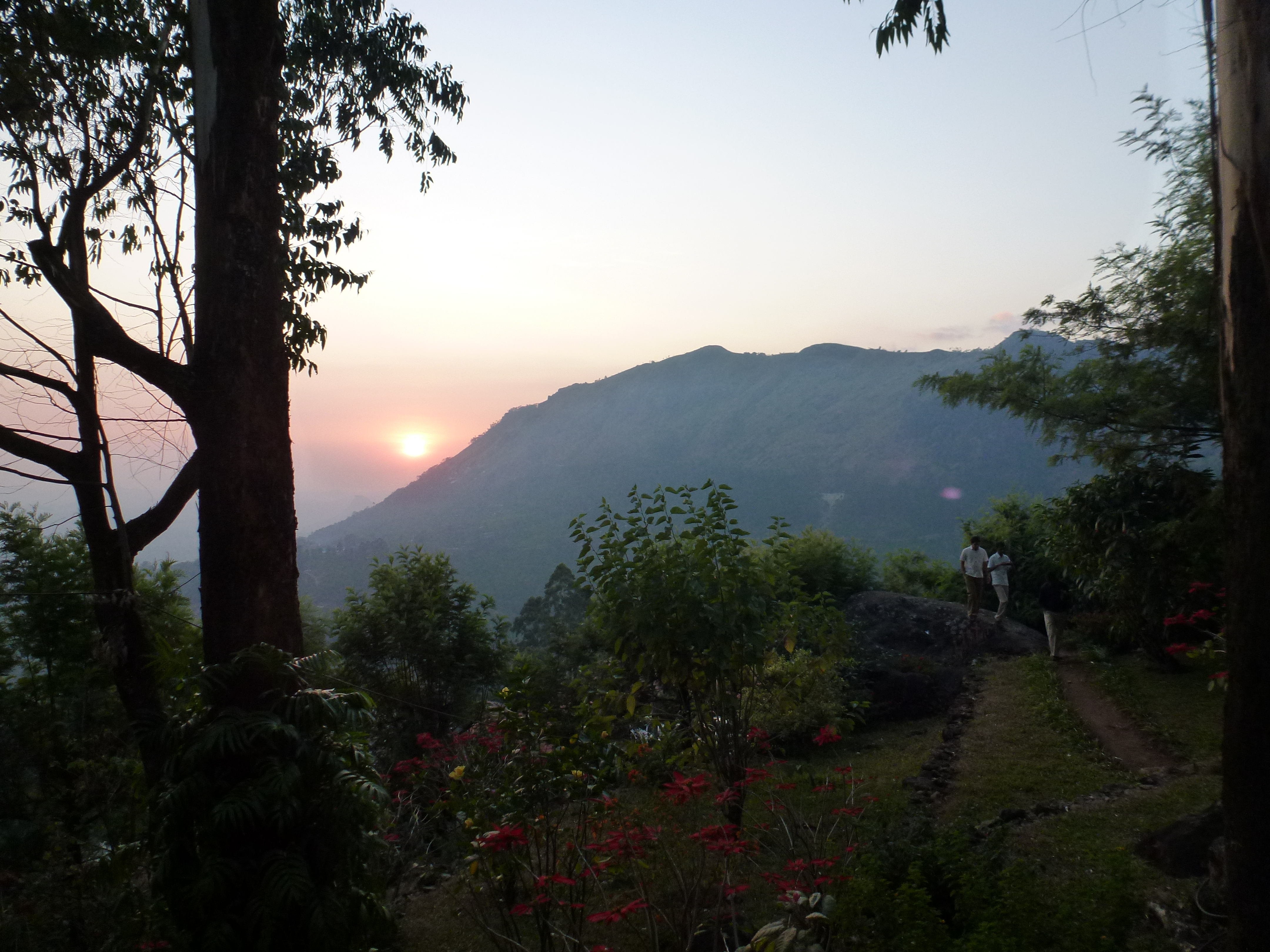
I go because so much is new and exotic, especially the mornings. Beautiful birds, I don’t even know their names, sing sweet songs in the garden, just outside my window. The sun creeps over the mountain and shines on the east slopes across the valley, bringing to life tea plantations that go on for as far as I can see. A comforting smell of wood burning to fuel fires for breakfast blends with a faint aroma of simmering curry. It’s time for breakfast. 

I’ve never been a big fan of breakfast at home but reluctantly I down some wholesome cereal or a boiled egg every morning.It’s different here.

Breakfast is a food-lovers delight. I love Indian breakfasts. Dosas, pizza-size, paper- thin rice flour pancakes, are served with sambar, a spicy, thick, yellow lentil and vegetable soup served with chutney, coconut, tomato and/or my favourite, coriander chutney. For variety, instead of dosa I ask for idli, an uncooked-looking feather-light rice dumpling that I dip into the mouth-watering sambar.

“How is everything this morning?” Ali, the chef, asks.

Ross is eating his omlet and toast. He loves his Canadian breakfast that is also served here.

“OOOO I gush. I love this. May I ask you a question? You don’t have to answer, you’re so busy now. But I really need to know how to make it.” I slurp up more sambar. “It’s sooo good.”
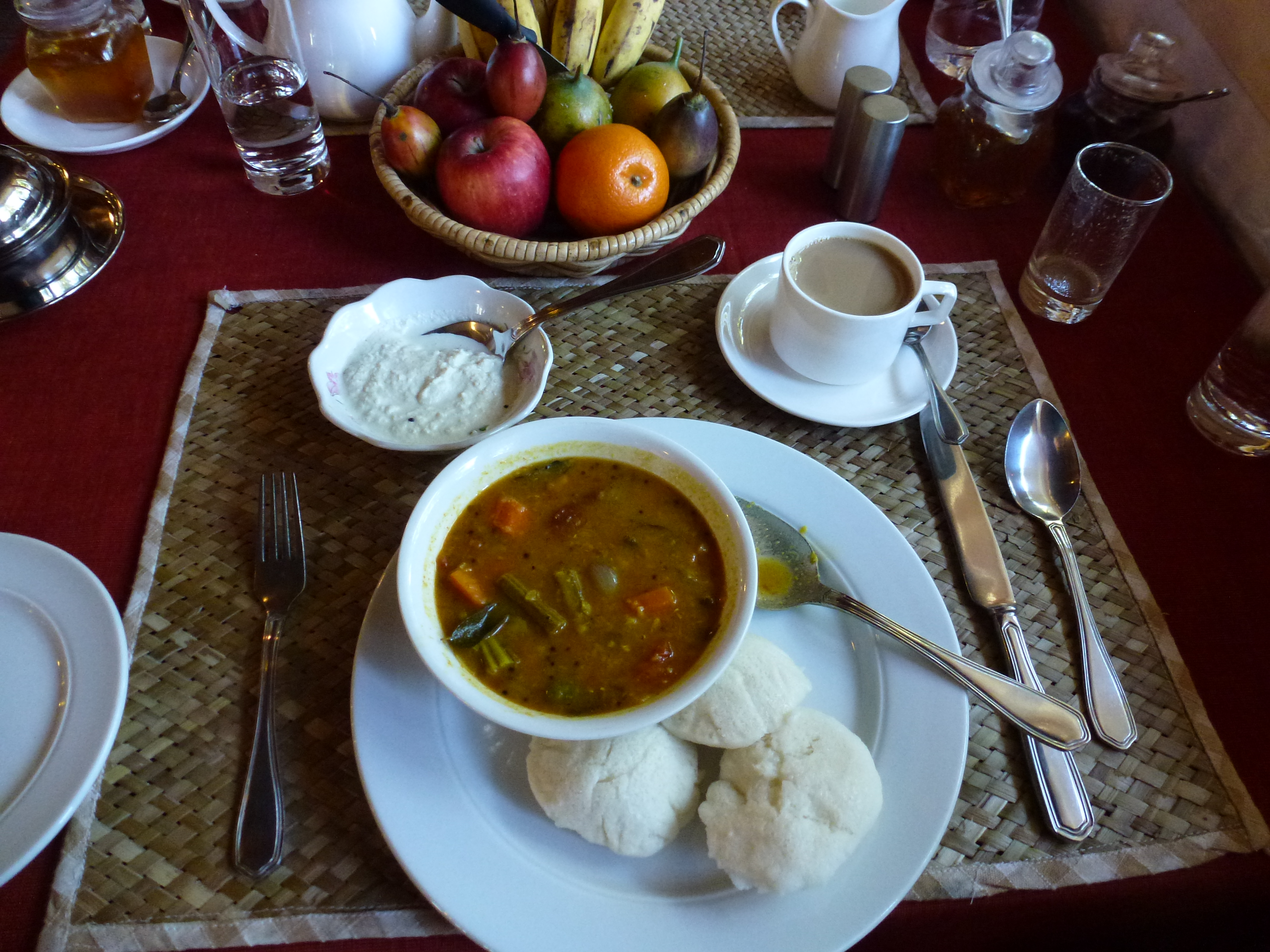
“Dosa and sambar are very, very traditional.” Ali says. “Also idli. Have you tried idli yet? People love idli too. We make everything from scratch here. It’s important.”

“First you need to soak the grains. Then you grind them like this” and he rolls his hands together. The dosas look easy to make but to be tasty you must carefully prepare the mixture.

“From scratch.” He says again. “For the sambar also. You must always use fresh curry leaf and coriander.” I’m thinking about some of my spice jars at home that have been sitting in the cupboard for fifteen years. Ali continues, “We never use pre-mixed curry powder here. We mix each special spice for every dish we prepare. And we always use tomato, onion, lentils for the sambar.”

I’m in awe and make a secret vow to reform my cooking practices. But I need to let Ali know that I can make some things well, although maybe not sambar and dosa. “Have you tied Angel Pie I ask? It’s our family’s favourite dessert. You can get it on my blog. In fact if you email me your recipes for dosa and idli I can put them on my blog too.”

Ali is thrilled.

And so, dear friends and family here is Ali’s recipe for idli and dosa.

I’ll make it for you some day.

IDLI

Boiled Rice

750 gms / 3 cups

Raw Rice

250 gms / 1 cup

Urad Dal

250 gms / 1 cup

Salt

To taste

STEPS TO PERFORM

Step 1 : Soak the rice and dal seperately for 2 hours
Step 2 :  Grind seperately, the rice should be coarse in texture and the dal should
be light and fine texture.
 
Step 3 : Mix together, add salt, blend.
 
Step 4 : Keep covered, ferment overnight.
 
Step 5: Next morning boil water in the pan of the idli steamer, place perforated idli
tray lined with muslin cloth on top.
 
Step 6: Pour idli batter into each cup
 
Step 7: Steam until done.
 
Step 8: Check if done by prickling with a fork.
 
Step 9: To remove idli, turn upside down on a platter, sprinkle water over the muslin
and slowly remove the muslin.
 
Step 10: Remove idli and keep it warm in a casserole.

DOSA


INGREDIENTS

QUANTITY

Raw rice

125 gms / 1/2 cup

Par boiled rice

625 gms / 2 1/2 cups

Methi seeds

1 tbsp / 12 gm

Urad dal

250 gms / 1 cup

Salt

To taste

STEPS TO PERFORM

Step 1 : Soak rice and dal seperately for 4 hours. Grind seperately to a fine batter.
 
Step 2 : Mix both batter together with salt to taste.
                  
Step 3 : Set aside overnight to ferment.


Step 4 : Next morning, spread dosa mixture thinly on a heated and greased tava.

Pour a teaspoon of oil around dosa. Cook and fold.

 
Step 5: Serve with sambar and chutney.
 
Step 6: If masala dosa, keep the potato filling in the centre and
fold.

Coming eventually: It is very difficult to write when the warm breezes are blowing and the sun is shining. My posts will continue to be erratic. I want too be outside all the time where my pencil and notepad work but the computer doesn’t. Thank you for your comments. I love them.  As soon as I can I’ll tell you about my cooking lesson with Binot, the chef at Windmere. We made my favourite, Sambar.

Elephants and Tea Plantations

We climbed out of Tamil Nadu, leaving its magnificent ancient stone temples behind and ascending seventeen hairpin turns. I wasn’t prepared for the haunting beauty of the landscape – the 2695 metre granite summit of Anamudi, South India’s highest peak; impeccably cropped tea plantations interspersed with groves of cardomen, banana, coffee and coconut; abundant wildlife and exotic birds. We are in Kerela to spend a few days at Windermere Estate Plantation and Retreat at 1600 metres on a hilltop near the former British Hill station at Munnar.

From where I am writing I can see 260 degrees around me, the rest is blocked by an immense granite outcrop, eucalyptus trees, and poinsettia in full bloom.

On our way back from Eravikulam National Park yesterday, we saw a wild, mature male elephant grazing on the border of a little farm about a ten-minute drive from where we are staying. We watched him for a long time from a comfortable perch on a stonewall about a hundred metres away, closer than I’ve been when watching moose or deer at home in the Rockies. The wild tuskers (as the mature male elephants are known around here) are not usually seen. But Ganesha, known to our wildlife guide Moni, is king of the animals and is afraid of nothing, it seems. He weighs over eight tons and eats about 300 kilos of vegetable product a day, including, we noted, lots of bamboo.

How could we not love this awesome place and the great beast whose performance for us was so stately?

Notes from south India

Writing helps me think. These are my thoughts from our first day in south India.

“Have you ever been to Chennai?” I ask the heavy-set, relaxed looking woman behind me. She’s in jeans, dragging her backpack along beside her and clutches a US passport. “You look as though you know what’s happening here.”

“No. I’ve never been here.” She laughs. “I just go with the flow. I travel a lot for business.”

We’ve finally landed. After a couple hours in the Calgary airport, a nine-hour flight to Frankfurt, a quick change of planes, two movies, a sound sleep I’m transported, as if by magic, to Chennai, in Tamil Nadu, south India.

I should say I’m almost there. Before I’m admitted entry I have to get through this 150-metre line-up that is in gridlock – eight hundred other people, like me, standing still, waiting for Indian Immigration services to stamp their visas. But let’s be positive even if it is 2 AM. There are eight hundred opportunities for stories in this line-up and I’m curious. Why do people come to Chennai?

“What sort of work do you do?” I ask her.

“We have a manufacturing company in Chennai and a few customers in the area nearby.” She looks at me, sizing me up, I guess, to see if I might understand. “It’s bushings.” She says. “We manufacture bushings.”

“Oh bushings,” I say, impressed that I at least I know what bushings are. “Just got some new ones put in our car. They cost me a fortune. I didn’t know they were made in India.”

“Yes,” she says. “Customers are complaining that the price is too high. That’s why I’m here. To see if there’s anything I can do about it.”

For two thousand years merchants have been coming to the southern peninsula of India for business. The Chinese, the Greeks, the Romans, and people from Central Asia came. In the thirteenth century, Marco Polo sailed to India on his way home to Italy from China. He wrote that he was fascinated by the tremendous opportunities for trade and of the possibilities for adventure, like finding the place where St Thomas was martyred.

In many ways life hasn’t changed. Today many travellers who come to South India are here to trade. People who come from Europe and the Americas are engaged in automobile manufacturing and IT (outsourcing seems to be the buzz word.) I’m here for adventure/holiday, to explore the history, culture, and sunny beaches.

The British built our hotel in Chennai, the Connemarra, in 1854. Tidy sepia photographs, washed-out water colour paintings and a huge portrait of Lord Connemara standing beside the regal H.H. Nawar Mohammad Munawar Khan Banadur IV Prince of Arcot (1889-1903) line long, mahogany-clad hallways and tell the story of how, in 1653, not to be outdone in business by the Portuguese and Dutch, The British East India Company established Fort St George. Indian history along with the names is not tidy like the row of pictures on the wall of our hotel. The British eventually named Fort George Madras. In 1996 Madras was renamed Chennai, back to its old name before the British came.

Inside the old walls of Fort George is the home of the current legislative assembly of Tamil Nadu, a museum depicting the history of Fort George and beautiful St. Mary’s church. As I walk around the church, I can imagine the lives of promising young British officers, who came here over three hundred years ago for adventure and to advance their position in the military. Their gravestones pave the churchyard and mark their deaths caused by cholera, coup de soleil (hyperthermia) and bizarre accidents.

Way before the British, in the first century, the Apostle Thomas came to India. He too is entombed in Chennai. This afternoon while we visit dozens of little boys kick a soccer ball and make faces for our photos (no different from the little boys I know at home) in the immense courtyard of San Thome Cathedral and the little shrine where, we are told, the body and relics of St Thomas lay.

The annual Chennai Dance Festival is taking place this week at the Music Academy of Madras and the performers tonight are the best in the world. The dance, Bhartanatyam, one of the oldest traditional dance forms, is unique to Tamil Nadu and dates from the first century, the time of St Thomas. We can’t miss it so we purchase tickets for the finest seats in the T.T.Krishnamachari Auditorium for this auspicious event.

Auspicious: marked by lucky signs or good omens. Auspicious: another Indian buzzword.

Is it auspicious that we have arrived in Chennai today just in time for the last day of the festival?

Auspicious maybe.

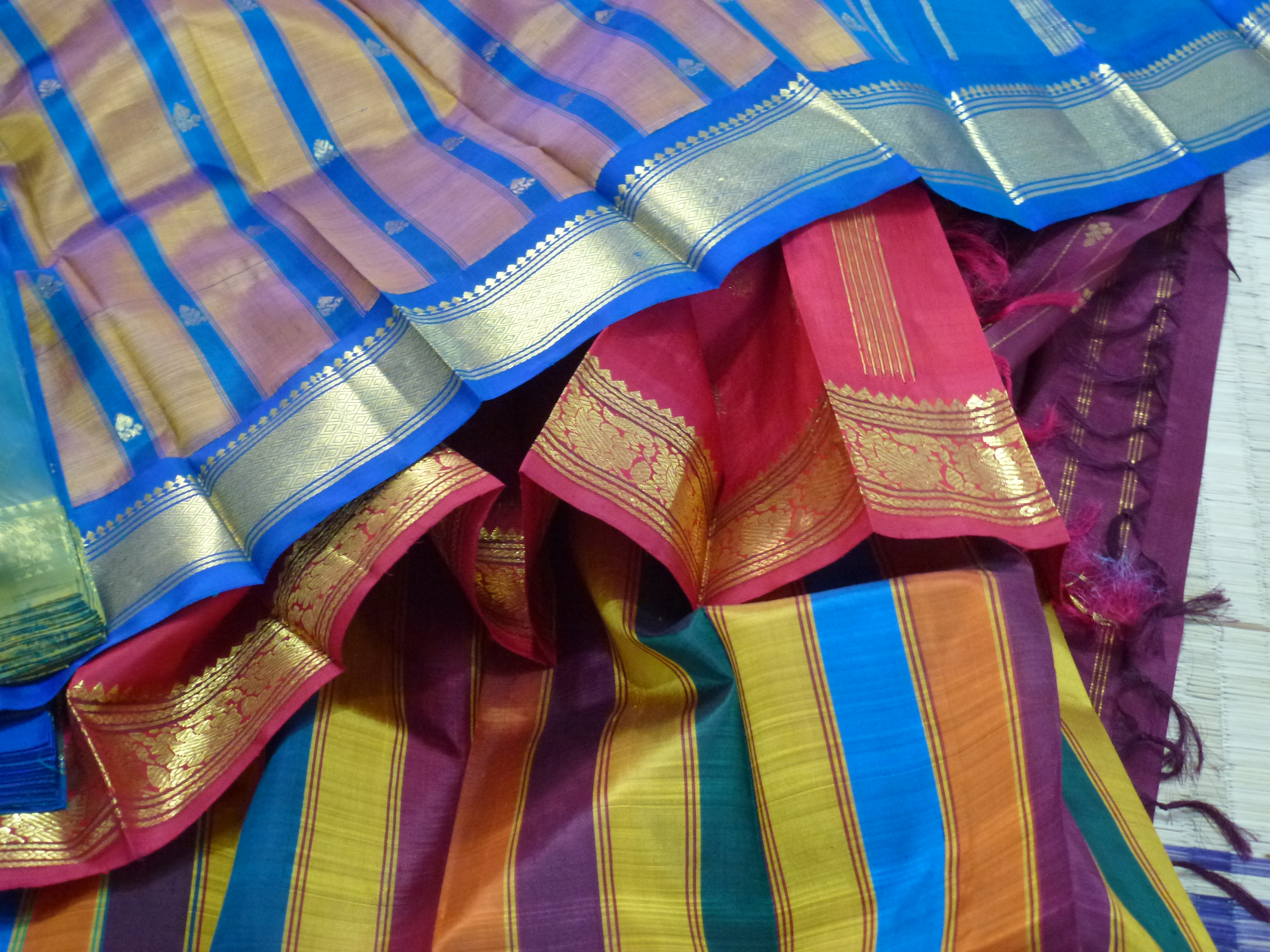
But I feel conspicuous. As we are led to our seats in the centre of the fifth row, a sea of colourful silk saris surround me. I am in khaki multi-pocketed trousers and a t-shirt.

Thankfully, the lights dim, the theatre darkens and a thin ray of light shines down on a small colourful shrine on the stage. A flute, violin, tambour and a male voice musically begin to recount stories based in Hindu scriptures and mythology. A dancer, dressed in a billowing red and purple silk costume of pantaloons and wide ribbons of gold elegantly moves forward on stage from the darkness behind. The graceful movement of her limbs, and head and eye movements work with the musicians to portray stories that have been told in India for two thousand years.

Incredible India.

I know now that being able to attend that performance our first evening in Chennai was auspicious – a stroke of luck. It helped me understand the great temples and culture of Southern India I’m visiting this week – the shore temple and famous stone carvings at Mahaballipurnam; the 9th century Natraja Temple, where the patron deity, Shiva, Lord of the Dance, details in granite carvings the 108 steps (is this where yoga started?) of the Bhartanatyam dance; the Airavateshvars Shiva temple, a UNESCO World Heritage Monument; and, Brahadaeswar another Shiva temple and also a UNESCO monument.

Coming eventually:  Coriander, cardomen, tamarind and maybe a guest post.